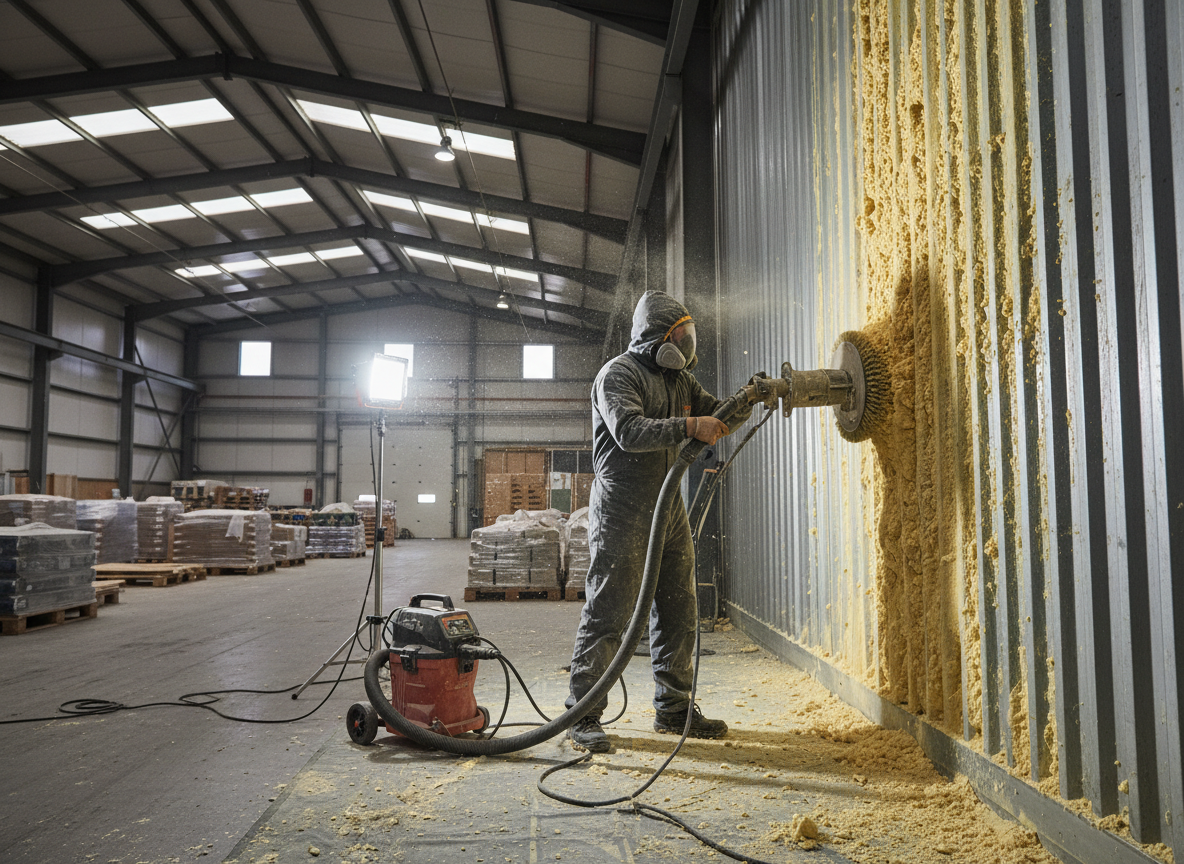
Warehouses in Bridgwater often feature steel frames and concrete floors from the mid-20th century industrial growth around the docks and Bristol Road estates. Spray foam applied decades ago frequently traps moisture against metal, leading to corrosion that only becomes visible once removal begins. Damp Somerset winters accelerate this bonding, so crews must work in controlled sections to prevent flash rust on exposed steel during the process.
Removal in these structures requires negative air machines and sealed containment because dust from polyurethane can drift through open loading bays into adjacent units. Older foam layers on roof decks near the River Parrett often contain embedded debris from past floods, demanding slower scraping techniques than standard residential jobs. Workers check for hidden electrical conduits and pipework before cutting, as many Bridgwater warehouses still use original 1970s wiring runs.
Disposal follows Environment Agency rules for construction waste generated in the TA6 postcode, with loads taken to licensed sites rather than general landfill. Floor slab cleaning after foam removal must account for the clay-heavy soils common around Bridgwater that retain water and slow drying times before new coatings can be applied.
Technician insight
In Bridgwater, the thing that catches most people out with Warehouse spray Foam removal is how the clay soils and proximity to the River Parrett keep moisture trapped behind the foam on lower walls, so what looks like a straightforward scrape job often turns into extra corrosion treatment on the steel before any new work can start.
Dockside Warehouse Foam Removal
Foam on the roof deck of a 1960s warehouse near Bridgwater docks had started to delaminate after repeated winter damp. Inspection showed heavy adhesion to purlins caused by tidal humidity. Crews removed the material in sealed bays, treated light surface rust, and cleared all waste in one day, leaving the structure ready for inspection.
How it works
- 1
Site Assessment
Walk the warehouse interior and roof to map foam depth, substrate condition, and any water ingress points typical in Bridgwater's older industrial stock.
- 2
Containment Setup
Install sealed barriers and extraction units to keep dust from migrating through open bays into neighboring units on the estate.
- 3
Foam Removal
Use mechanical scraping and solvent softening in sections, paying extra attention to steel beams where moisture from the Parrett has increased adhesion.
- 4
Surface Preparation and Disposal
Clean floors and steel, then remove all waste to licensed facilities while documenting the cleared areas for the client.
Pricing
Pricing depends on warehouse square footage, foam thickness, and access constraints; site visit required for accurate assessment.