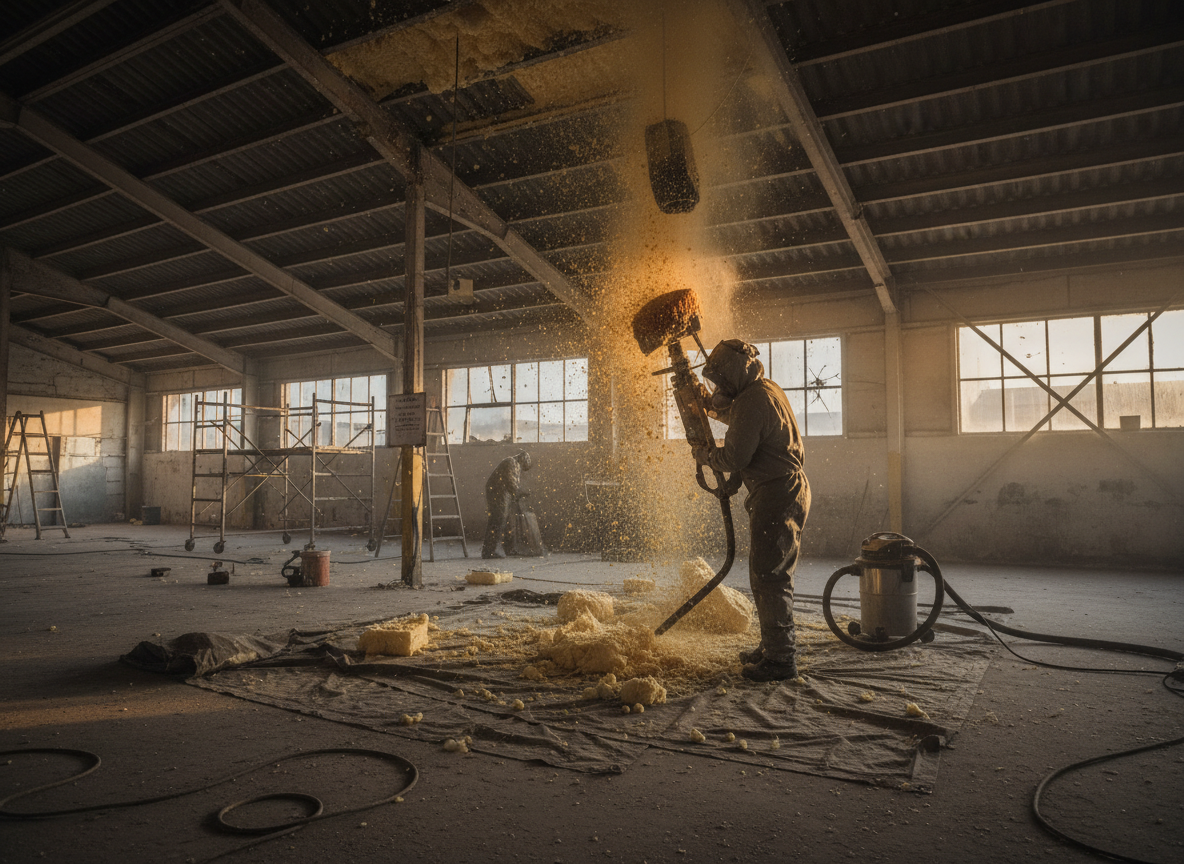
Commercial spray foam removal in Bridgwater often involves older warehouse stock along the River Parrett corridor and post-war industrial units where closed-cell foam was applied to flat roofs or steel frames. These installations frequently trap moisture against metal decking, leading to hidden corrosion that only appears once the foam is cut back. Technicians must work in sections to maintain structural stability while using negative-air machines to contain dust and fibres that can drift into adjacent tenanted spaces.
Edge cases include listed buildings near the docks where planning consent is required before any mechanical removal begins, and sites with asbestos-containing roof sheets where foam bonds directly to the hazardous material. In these situations the job shifts from simple scraping to controlled dismantling with licensed contractors on standby. Wet winter conditions common in Somerset soften the foam but increase slip risks on metal surfaces and slow the drying time needed before new insulation can be installed.
Regulation notes cover the need to segregate waste under hazardous classification when the foam contains legacy flame retardants, and the requirement to document every cut edge for building control sign-off on larger commercial jobs. Homeowners and facility managers sometimes attempt DIY removal on small outbuildings, only to discover that residual isocyanate vapours remain active in poorly ventilated roof voids typical of Bridgwater's Victorian terraces converted to light industrial use.
Technician insight
In Bridgwater the thing that catches most people out with Commercial Spray Foam Removal is the way the River Parrett's winter flooding leaves standing water under older warehouse floors, softening foam from below and turning what looks like a simple scrape into a multi-day drying and substrate repair job.
Foam Removal from Disused Factory Unit
Problem: closed-cell foam on a steel roof deck in a former glove factory near the docks had trapped condensation and begun to delaminate. What we found: extensive hidden rust along the purlins and residual moisture from seasonal flooding. What we did: sectioned the foam under negative pressure, treated the steel, and removed all material over three days. Outcome: building control approved the cleared space for new tenant fit-out.
How it works
- 1
Site Assessment
Inspect roof voids, wall cavities and floor insulation in the commercial property, noting access points and any moisture damage linked to Bridgwater's high water table.
- 2
Containment Setup
Install negative pressure enclosures and dust extraction to protect neighbouring units common in industrial estates around Bristol Road.
- 3
Mechanical Removal
Cut and peel foam in controlled sections using specialist tools suited to steel and concrete substrates found in local warehouses.
- 4
Waste Removal and Verification
Bag and remove all debris, then carry out moisture and air-quality checks before handover.
Pricing
Pricing varies by building size, foam thickness, access restrictions and waste classification in older Bridgwater commercial stock.