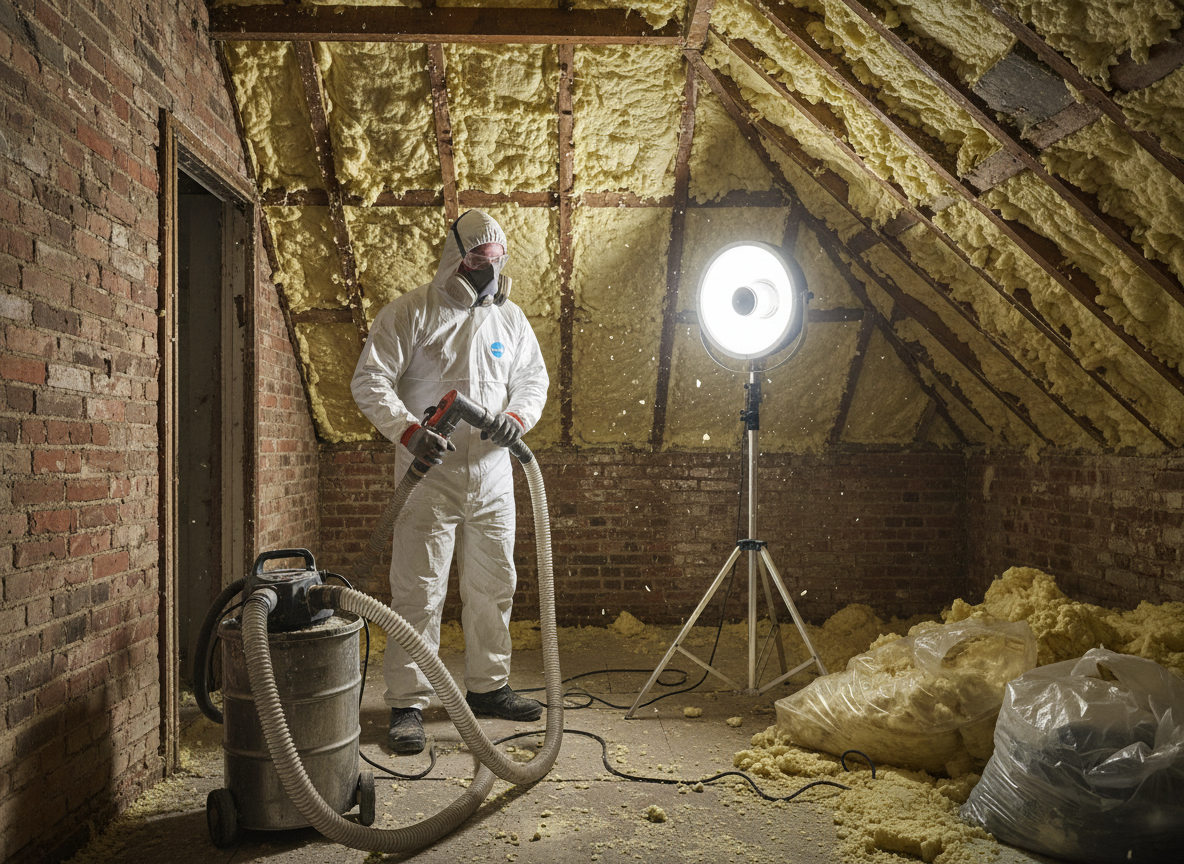
Bridgwater's older terraced housing stock, much of it built before 1950 along streets near the River Parrett, often received spray foam insulation in lofts during the 2000s. Over time the closed-cell material traps condensation from the county's frequent rainfall and high humidity, leading to timber decay in rafters and ceiling joists. Removal requires careful cutting and vacuum extraction to avoid disturbing original lath and plaster ceilings below, especially in properties around the town centre and Sydenham estate where access is tight.
Somerset weather patterns bring prolonged damp winters that accelerate foam breakdown and mould growth underneath. Technicians must check for hidden electrical cables and pipework common in these pre-war builds before starting, as the foam can conceal faults. In Bridgwater's flat terrain near the levels, poor ventilation in roof spaces makes full extraction essential rather than partial removal to prevent recurring moisture problems.
Edge cases include foam applied over existing mineral wool in 1960s semis on the outskirts, where layers must be separated without damaging felt underlays. Local building practices mean many roofs have limited headroom, requiring sectional dismantling of boards. Proper disposal follows Somerset waste rules for polyurethane materials, and the work often reveals the need for new ventilation or insulation upgrades suited to the region's conditions.
Technician insight
In Bridgwater the thing that catches most people out with Residential Spray Foam Removal is how the foam hides rot in rafters of pre-1950 terraces near the river. Once winter temperatures drop and the damp sets in, the timber damage spreads faster than homeowners expect because the closed cell material stops any natural drying.
Hidden Rot in a Sydenham Terrace
Homeowner noticed musty smells in the loft of a 1930s terrace off Bristol Road. Inspection revealed spray foam trapping moisture against original timbers. We removed the foam section by section, dried the affected joists, and fitted new vents. The roof space now stays drier through Somerset winters.
How it works
- 1
Initial Inspection
Assess foam condition, roof structure, and moisture levels in the Bridgwater property.
- 2
Safe Extraction
Cut and remove foam in controlled sections while protecting ceilings and wiring.
- 3
Cleaning and Drying
Vacuum residues and address any damp timber before further work.
- 4
Ventilation Check
Inspect and improve airflow to suit Somerset's wet climate.
Pricing
Cost depends on property size, foam depth, and access difficulty in older Bridgwater homes.