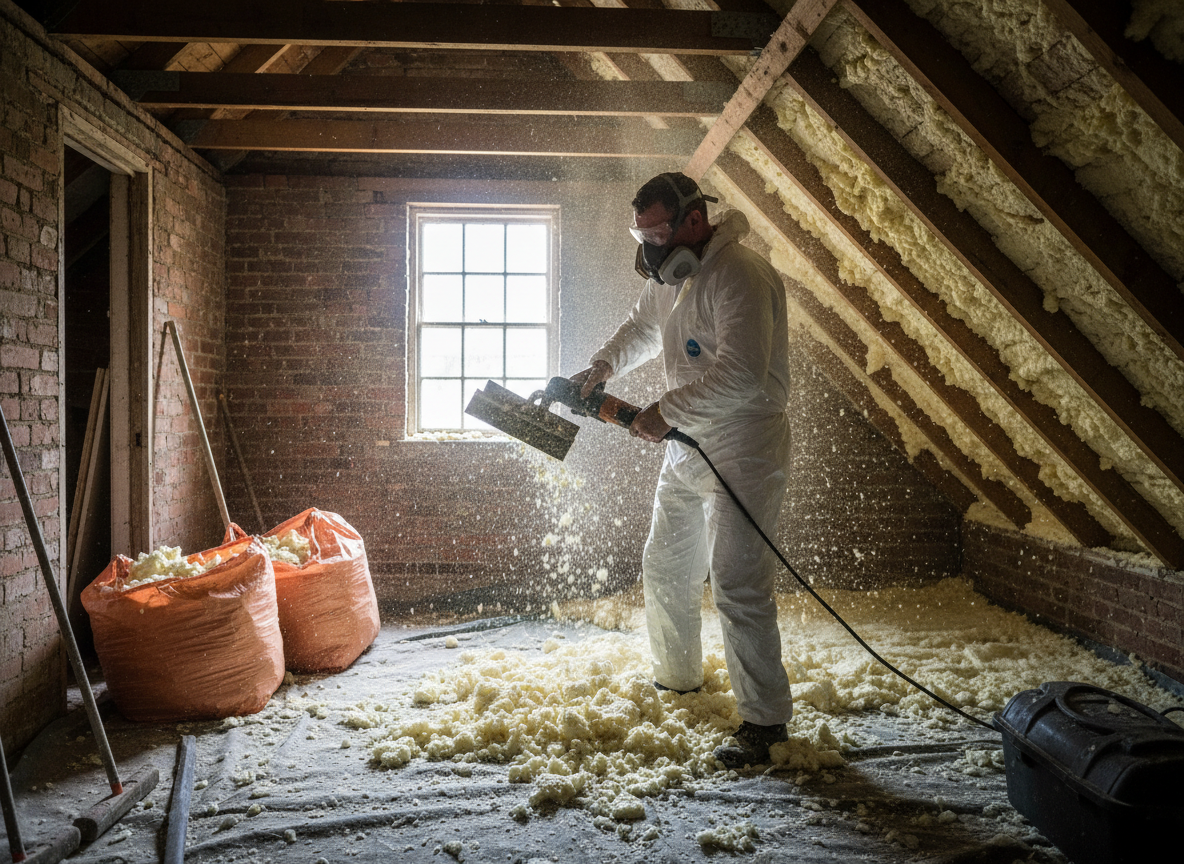
Thermal spray foam removal in Bridgwater often involves older terraced and semi-detached properties built before the 1970s along routes like Bristol Road and in areas such as Sydenham and Newtown. These homes frequently have roof voids packed with closed-cell foam that was applied directly to rafters and ceilings, trapping moisture against timber and accelerating rot once the foam degrades. Extraction requires cutting access panels, using negative-pressure vacuums and hand tools to peel the material without damaging original lath and plaster or slate roofs common in the Bridgwater area.
Seasonal damp from the Somerset Levels and occasional flooding near the River Parrett makes foam removal more involved during winter months when condensation builds inside voids. Crews working from the address at 2 Kimberley Terrace routinely encounter foam that has bonded to electrical cables and pipework, requiring careful isolation before any material is pulled. Leaving residue behind can reduce ventilation and create hidden damp spots, so full clearance down to the original substrate is standard practice on every job.
Homeowners sometimes attempt DIY stripping with scrapers, but this releases fine particles and leaves thin layers that later cause adhesion failures for new insulation. Professional removal includes bagging all waste for licensed disposal and checking for asbestos in older boarding before work starts, a common precaution in Bridgwater’s pre-war housing stock.
Technician insight
In Bridgwater, the thing that catches most people out with thermal spray foam removal is how the foam bonds to the underside of old slate roofs on terraced houses near the river; once winter temperatures drop the condensation trapped behind it soaks the rafters and you end up replacing timber you never planned to touch.
Sydenham Loft Clearance
Homeowner in Sydenham reported musty smells and peeling ceiling paper after foam had been in place for eight years. On inspection the closed-cell foam had pulled away from the rafters in several spots, allowing moisture from the nearby Levels to collect. We cut access hatches, extracted the foam under negative pressure and cleared residue from cables without disturbing the original lathe. The void dried out and the ceiling was left ready for new insulation.
How it works
- 1
Site Survey
Assess loft or wall cavities, check for hidden services and measure foam depth across the Bridgwater property.
- 2
Access Preparation
Create controlled entry points and set up dust extraction to protect living spaces during removal.
- 3
Foam Extraction
Peel and vacuum thermal spray foam in sections, isolating electrics and pipework as work progresses.
- 4
Clearance and Clean
Remove all residue, bag waste and leave the void ready for inspection or new insulation.
Pricing
Cost depends on property size, foam thickness and access difficulty in Bridgwater homes.