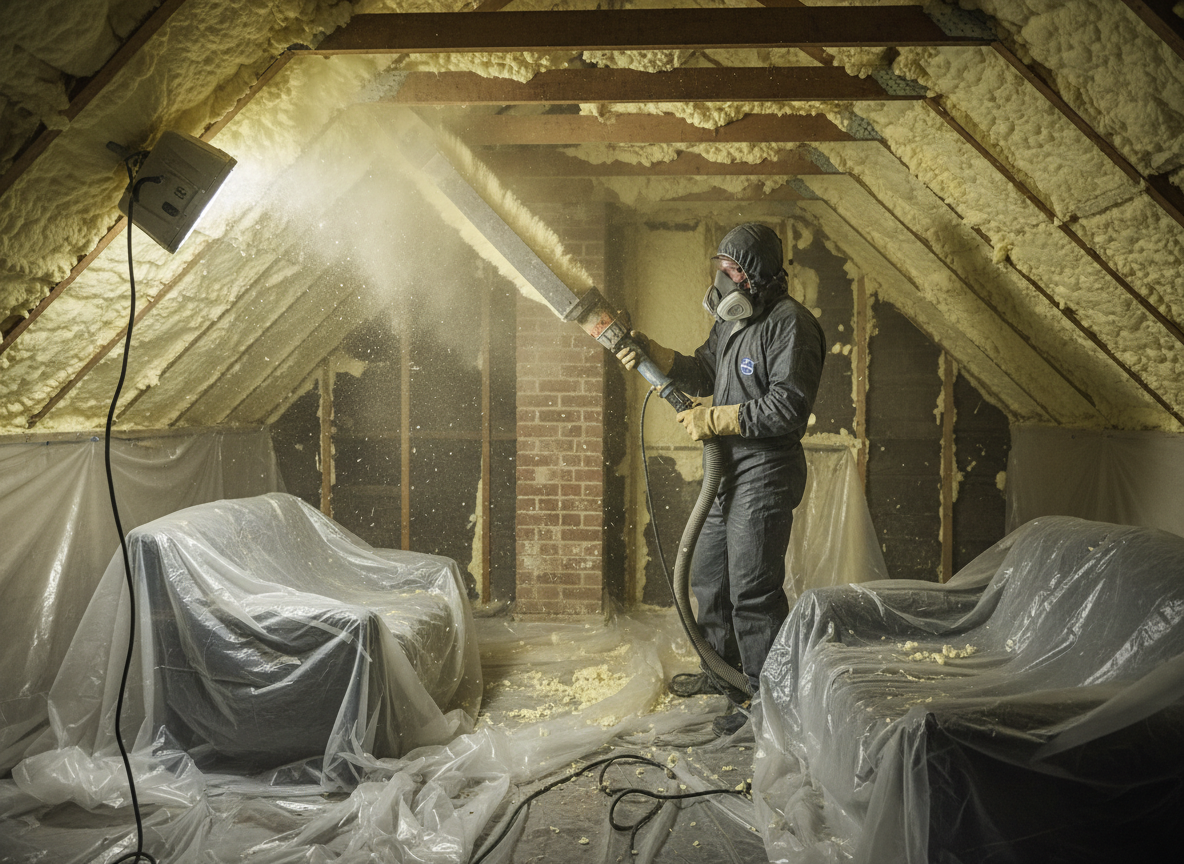
Open cell spray foam bonds tightly to rafters and joists in Bridgwater's Victorian and mid-century terraces, but its open structure readily absorbs moisture from the area's frequent rainfall and high water table near the River Parrett. Over time this leads to sagging, mould growth and reduced loft ventilation. Removal requires controlled negative-pressure setups to stop foam particles migrating into living spaces below, especially in properties with shared chimney stacks common along Bristol Road and St Mary Street.
Cutting and scraping must follow the timber grain to avoid damaging original lath and plaster ceilings, a frequent issue in Bridgwater's pre-1930s stock. Once the bulk is cleared, residual cells are vacuumed from every crevice because even small pockets left behind can re-expand when humidity rises again in autumn. Proper disposal follows local Somerset waste rules for construction foam, which cannot be mixed with household refuse collected from estates like Sydenham or Hamp.
Homeowners often discover the foam was applied over existing insulation or electrical cables, creating hidden fire and wiring risks that only surface during extraction. In these cases the job expands to include cable rerouting and new insulation fitting before the ceiling is made good. Every Bridgwater removal therefore starts with a full loft inspection rather than assuming a straightforward strip-out.
Technician insight
In Bridgwater, the thing that catches most people out with open cell spray foam removal is how quickly the material soaks up water in the older brick terraces around the town centre and along the river; once saturated it breaks apart in wet clumps instead of clean sheets, turning a half-day job into two days and requiring extra drying time before any new insulation can go in.
Sydenham Terrace Loft
Homeowner noticed mould spots on bedroom ceilings after heavy winter rain. Inspection found open cell foam saturated above the original lath and plaster. We set up containment, removed the foam in sections, vacuumed every crevice and left the loft ready for new mineral wool. Ceiling remained intact and mould risk ended.
How it works
- 1
Site Assessment
Inspect loft, check for moisture damage, map wiring and note shared walls in terraced Bridgwater homes.
- 2
Containment Setup
Install negative air machines and floor protection to keep dust from entering living areas below.
- 3
Foam Extraction
Cut and remove open cell material in sections, vacuuming residues from rafters and joists.
- 4
Clearance and Disposal
Remove all debris, dispose of foam per Somerset regulations, then carry out final clean.
Pricing
Cost depends on loft size, foam depth and any hidden wiring or damp repairs needed; we provide a clear written quote after the site visit.