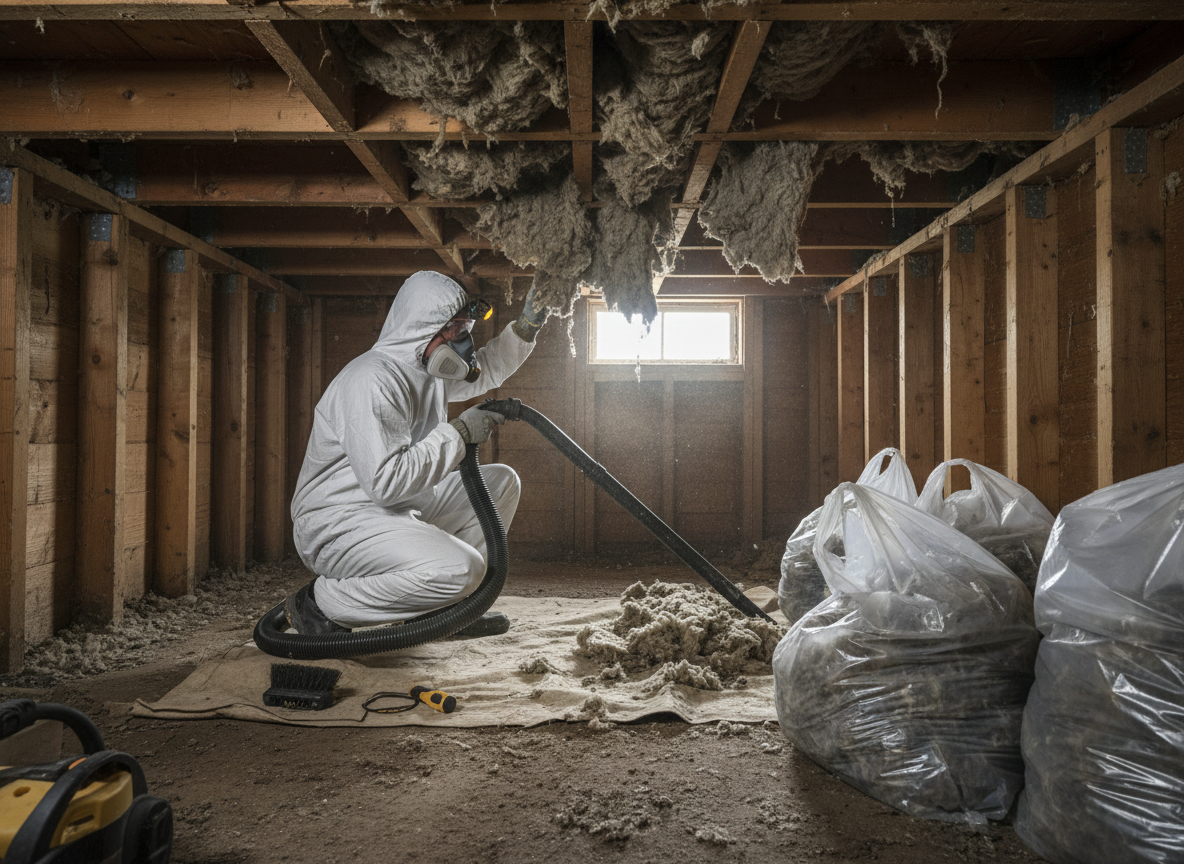
Bridgwater's older terraced housing stock along Bristol Road and in central neighborhoods often has spray foam applied directly to rafters in the 1990s and 2000s. Once winter temperatures drop and the Somerset Levels bring persistent damp, the foam can trap condensation against timber, leading to rot that only becomes visible when ceilings stain. Removal requires cutting the material in controlled strips while protecting lathe and plaster ceilings below, then ventilating the roof space before any new insulation goes back in.
Many post-war semis in Sydenham and east Bridgwater have foam injected into cavity walls. The local clay soil and high water table make these walls prone to moisture bridging once the foam degrades. Extraction here means drilling access points at staggered heights, vacuuming out the residue, and checking weep holes remain clear so water can still drain. Homeowners frequently underestimate how much dust travels through party walls into adjoining properties during the process.
Access in Bridgwater's narrow rear yards and shared alleyways limits equipment size. We stage containment sheeting from the ground up rather than trying to carry large vacuums through kitchens. After removal we always leave the roof space open for at least 48 hours so any residual moisture can escape before the owner considers re-insulating.
Technician insight
In Bridgwater, the thing that catches most people out with insulation removal service is how many 1970s semis on the east side have foam that has bonded to the felt under the tiles; pulling it tears the felt and you end up replacing roof sections you never planned to touch.
Loft Clearance on a Bristol Road Terrace
Owner reported black mould along the ceiling joists of a mid-terrace house. Inspection showed spray foam had sealed the eaves on both sides. We removed the foam in strips, cleared blocked soffit vents, and opened the roof space for airflow. The mould source was eliminated and the loft dried within a week.
How it works
- 1
Site Assessment
Inspect loft or wall cavities, note timber condition, and check for shared-wall migration in terraced properties.
- 2
Containment Setup
Seal rooms below and adjacent properties using plastic sheeting taped at all junctions to limit dust spread.
- 3
Material Extraction
Cut and vacuum foam in sections, working around electrical cables and pipework common in 1960s-1980s Bridgwater homes.
- 4
Clearance and Ventilation
Remove all debris, wipe rafters, and leave roof space vents open to dry before handover.
Pricing
Upfront quotes after inspection; final cost depends on property access, depth of foam, and whether wall cavities are involved.