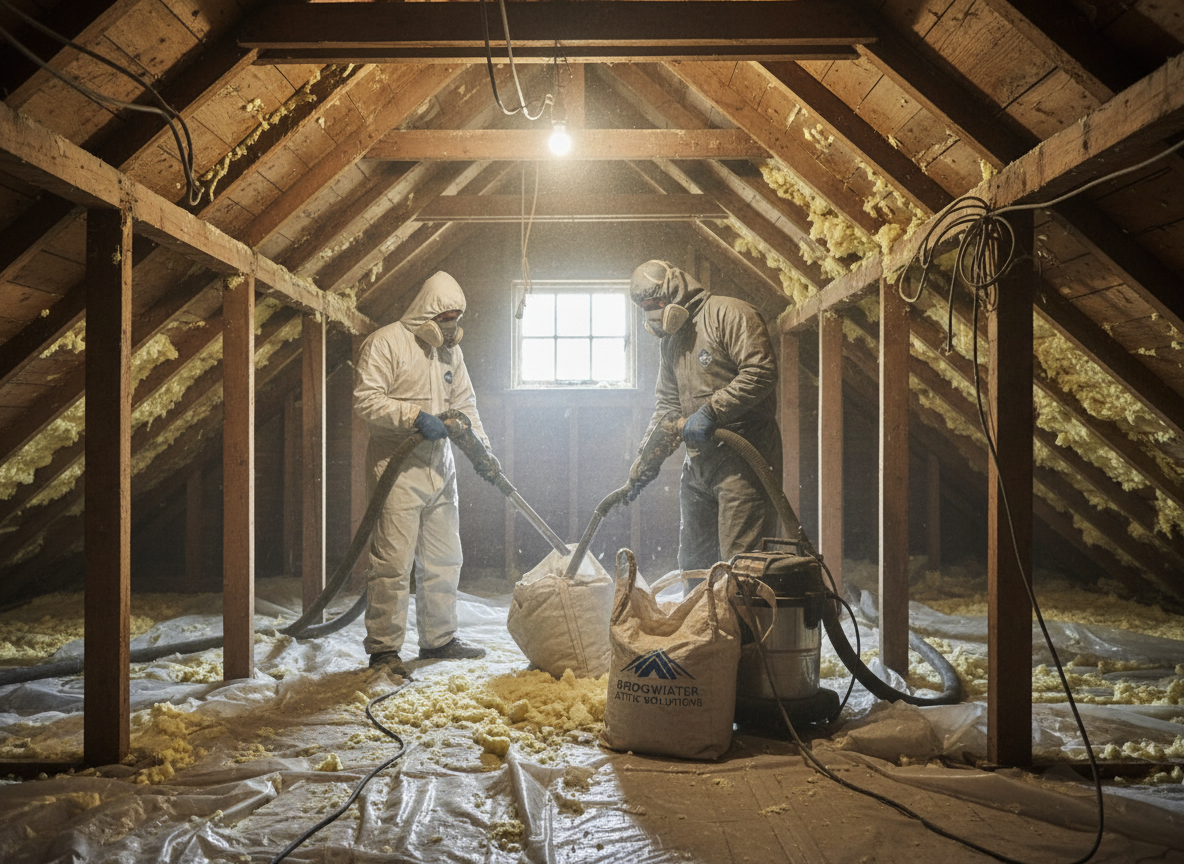
Bridgwater's older housing stock, particularly the Victorian and Edwardian terraces around the town centre and along Bristol Road, often features narrow roof voids with original lath and plaster ceilings. Closed-cell spray foam installed in these spaces traps moisture from the area's frequent rainfall and high humidity, leading to timber decay and reduced ventilation. Removal requires careful cutting and scraping to avoid disturbing fragile ceilings while containing dust and debris that can drift into living areas below.
Somerset weather patterns mean jobs frequently occur after prolonged wet spells when homeowners notice musty odours or staining on ceilings. The foam bonds tightly to rafters and felt in these unventilated attics, so crews work in sections, using negative air machines to keep particles from migrating. Disposal follows local waste rules for construction materials, and the process often reveals the need for new insulation that allows the roof to breathe properly in the damp county climate.
Access challenges are common in Bridgwater properties with small loft hatches or those converted into bedrooms. Technicians assess load-bearing timbers first because foam weight plus any trapped water can stress older joists. Post-removal, the attic is left clear for inspection, with advice given on alternatives like mineral wool or breathable boards suited to the region's conditions rather than reapplying impermeable foam.
Technician insight
In Bridgwater, the thing that catches most people out with Attic spray foam removal is how the damp Somerset climate and tight voids in pre-1950 terraces let the foam trap condensation against the original felt and timbers. Homeowners often assume it's just a cosmetic fix until we open the space and find rot starting on the rafters.
Condensation Issues in Central Bridgwater Terrace
A homeowner on Bristol Road reported musty smells rising from the attic in a 1920s terrace. Inspection showed closed-cell foam bonded to rafters and trapping moisture from local rainfall. We removed the foam in sections using containment, cleared residues, and left the space ventilated. The ceiling remained intact and the odour disappeared.
How it works
- 1
Site Inspection
Assess attic access, foam type, and any signs of moisture damage in the roof structure.
- 2
Containment Setup
Install dust barriers and negative air filtration to protect the rest of the property.
- 3
Foam Extraction
Cut and remove foam in controlled sections without damaging rafters or ceilings.
- 4
Cleanup and Disposal
Vacuum residues, clear debris, and dispose of materials according to local regulations.
- 5
Final Check
Inspect for remaining issues and discuss ventilation or insulation options.
Pricing
Upfront quotes after inspection; price depends on attic size, foam thickness, and access difficulty.